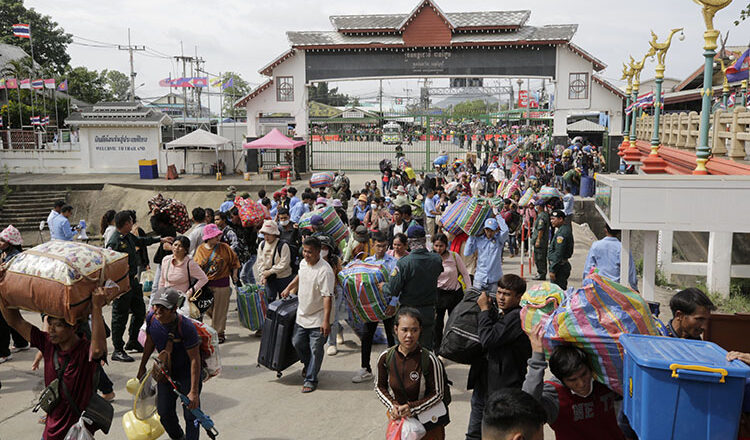
More than 920,000 Cambodians had returned amid the border conflict, including about 700,000 workers employed in Thailand. Nellie Ghusayni, chief of IOM’s mission in Cambodia, said the large-scale return challenged both workers and the country but was not a migration crisis. Cambodia had managed major returns during the 2020 pandemic and Thailand’s 2014 political turmoil; how it managed this return would shape development and its 2030 vision.
Prioritising returnees’ humanitarian needs
She said the response should first address returnees’ urgent humanitarian needs.
Many had returned without savings, some without receiving wages earned in Thailand, she said. They urgently needed to reach their home communities, find safe shelter and obtain income to support themselves and their families, particularly those with debts to repay.
Psychosocial needs also mattered. Sudden movement caused stress and uncertainty, and some workers who had spent years away had to readjust to family roles and reconnect with communities, Ghusayni said, urging prompt support for vulnerable returnees.
Different groups face different challenges
Drawing on years working with migrants globally, she said reintegration varied greatly among long-term and seasonal workers, women, families with children and domestic workers.
She described migration as highly gendered: women often earned less, received fewer benefits and faced greater risks of exploitation and gender-based violence. Migrants’ children, whether raised in Thailand or left in Cambodia, faced major changes. People with disabilities, ethnic minorities and LGBTQ people also encountered significant barriers requiring attention.
Addressing these needs required cooperation among government, civil society and international organisations, she said.
Government response and IOM cooperation
Ghusayni praised the Cambodian government’s proactive response and timely interventions.
She said Cambodia’s experience managing major returns had helped it demonstrate a capacity to respond quickly.
IOM’s response followed the Global Compact for Safe, Orderly and Regular Migration, using whole-of-government and whole-of-society approaches. It worked with ministries including Labour, Interior, Social Affairs and Women’s Affairs, and local authorities.
At Poipet border crossing, IOM and the Labour Ministry provided counselling, employment guidance, skills training and mental-health services, as well as humanitarian assistance including shelter and essential items.
From challenge to opportunity
Ghusayni said the next step was a comprehensive reintegration policy and framework empowering returnees to contribute to development.
She said Cambodia had demonstrated a strong response and that now was a crucial time to invest in migration governance so migration continued to support prosperity, development and inclusive growth.
Priorities included improving migration data collection and management, developing a comprehensive reintegration framework, integrating human mobility into social-protection, health and economic policies, and strengthening border management and security.
Cambodia had historically been a labour-sending country but was increasingly also a transit and destination country, she said. With its young population and rapid development, it could become a regional migration hub. Investment now would lay the foundations for that future.
Ghusayni said IOM and the United Nations would continue supporting Cambodia. She highlighted Cambodians’ resilience and the potential for government, UN and community cooperation to turn challenges into opportunities for the country’s future.